A leak, a flooded laundry room, a dishwasher that quietly dripped for weeks — water finds a floor before anyone notices. The first question after the water is gone is always the same: can this floor be repaired, or does it have to be replaced?
There is no honest answer without looking at the floor. But there are clear signs that point one way or the other, and knowing them helps you avoid two expensive mistakes: replacing a floor that could have been saved, and paying to repair a floor that was never going to hold.
First: the water has to be gone, and the floor has to be dry
This sounds obvious, but it is the step people skip. A new floor installed over a base that is still damp traps the moisture underneath. That trapped moisture is what causes smells, swelling, and a floor that starts to fail months later.
Before any repair or replacement decision, the leak itself must be fixed and the area must be dried out — including the base underneath the floor, not just the surface you can see. If the floor still feels wet, smells musty, or the base underneath is soft, it is not ready for new flooring yet.
What water does to each type of floor
Different floors react to water in different ways, and that reaction decides a lot:
Vinyl plank is waterproof through and through. It can often survive getting wet — the planks themselves do not swell. The problem is usually what is underneath: water trapped under the planks or in the base can cause smells and movement, so the planks sometimes have to come up, the area dried properly, and the floor put back down.
Laminate has a wood-fiber core. If water sits on it long enough, the core swells, the edges lift, and the boards start to peak at the seams. A small, quick spill wiped up fast is usually fine. Standing water that sat for hours or days is a different story — swollen laminate does not go back to flat.
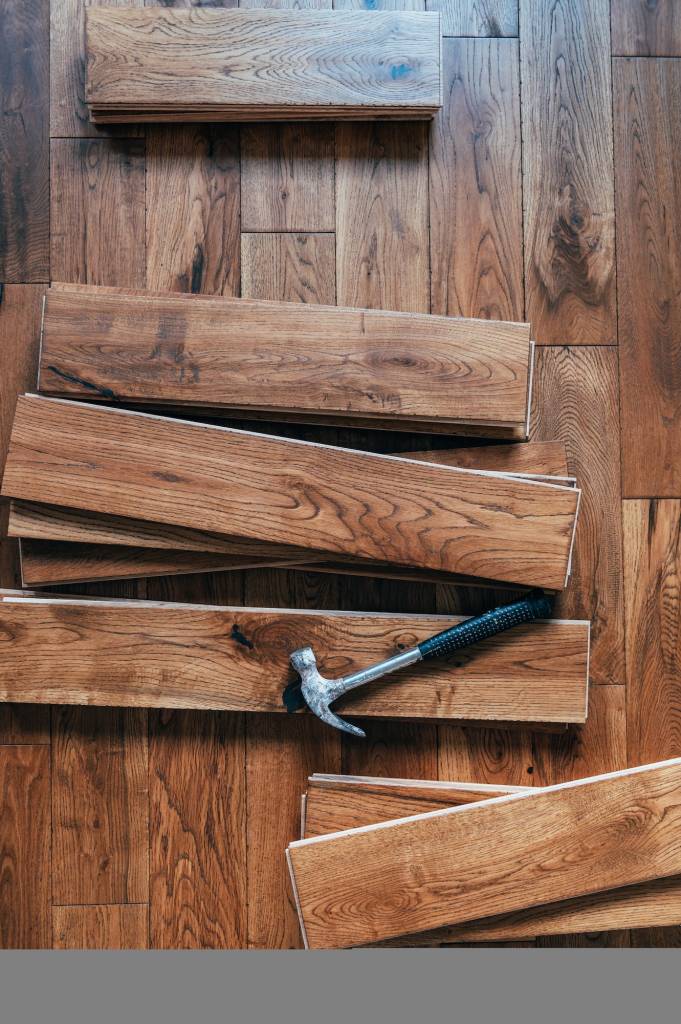
Hardwood can cup and warp when it absorbs water, and it can stain. Light, brief exposure sometimes dries out and settles. Longer exposure, especially with a damaged finish, usually leaves marks that only sanding and refinishing — or replacement — will fix.
Carpet soaks up water fast and holds it. A wet carpet over a wet pad is hard to dry fully, and it is the floor most likely to hold a smell after a flood. Often the pad has to go even when the carpet itself could be saved.
When a repair is the honest answer
A repair usually works when: the damage is limited to a small area — a few planks or boards, not the whole room; the base underneath is still solid, flat, and dry; the edges of the damaged area are still tight and level with the rest of the floor; the same flooring is still available, so the repair blends in.
In those cases, replacing just the damaged section is faster, cheaper, and looks right — if it is done with the same material and the same care as the original installation.
When replacement is the honest answer
Replacement is usually the right call when: boards or planks are swollen, buckled, or lifting across a large area; the floor feels soft, bouncy, or uneven when you walk on it — that usually means the base underneath is damaged too; there is a persistent musty smell, or you can see discoloration spreading under the surface; the damage runs under walls, cabinets, or fixtures where a partial repair cannot reach it properly.
Covering a damaged base with a new floor on top is the most expensive shortcut there is: the new floor inherits the old problem.
What an installer should check before quoting you anything
A serious estimate for a water-damaged floor starts with questions and measurements, not a price. Expect the installer to check: where the water came from, and whether the leak is fully fixed; how far the water spread — including under the floor, not just the visible wet spot; whether the base underneath is level, solid, and dry; which rooms and how much of the floor is actually affected.
If someone quotes you a firm number over the phone without seeing the floor, they are guessing. Water damage is exactly the job where guessing costs the most.
Memphis makes this worse — and worth doing right
Memphis humidity means floors here already live with moisture in the air. A floor that got wet and was not dried properly has a harder time recovering here than in a dry climate. That is also why the replacement floor matters: in rooms that see real water — kitchens, bathrooms, laundry rooms — a waterproof option like vinyl plank is usually the safer long-term choice. The right floor for a room that floods once is the floor that can get wet again without failing.
So: repair or replace?
Small, contained damage on a solid, dry base: repair it. Widespread swelling, a damaged base, or a smell that will not go away: replace it. And in between — the grey area where most real floors land — the answer comes from standing in the room, checking the base, and measuring, not from a photo or a phone call.
Call Nunez Flooring at (901) 552-2874, tell us what happened with the water, and we will come look at the floor and the base underneath, and give you a written quote for the repair or the replacement — whichever one your floor actually needs. Every installation we do is backed by our 6-month warranty.
See examples of our flooring installation work in our portfolio.