Walk into a beautiful older home in Germantown, or a newer build in Collierville, and the floor under your feet might be hardwood either way — but not the same kind of hardwood. Two floors can look identical on the surface and behave very differently underneath. One is a solid board of wood. The other is real wood on top of layers underneath.
Both are real hardwood. Neither one is fake. The difference is what is under that top layer, and that difference decides how the floor handles Memphis humidity, whether it can be sanded down years from now, and where in your house it belongs.
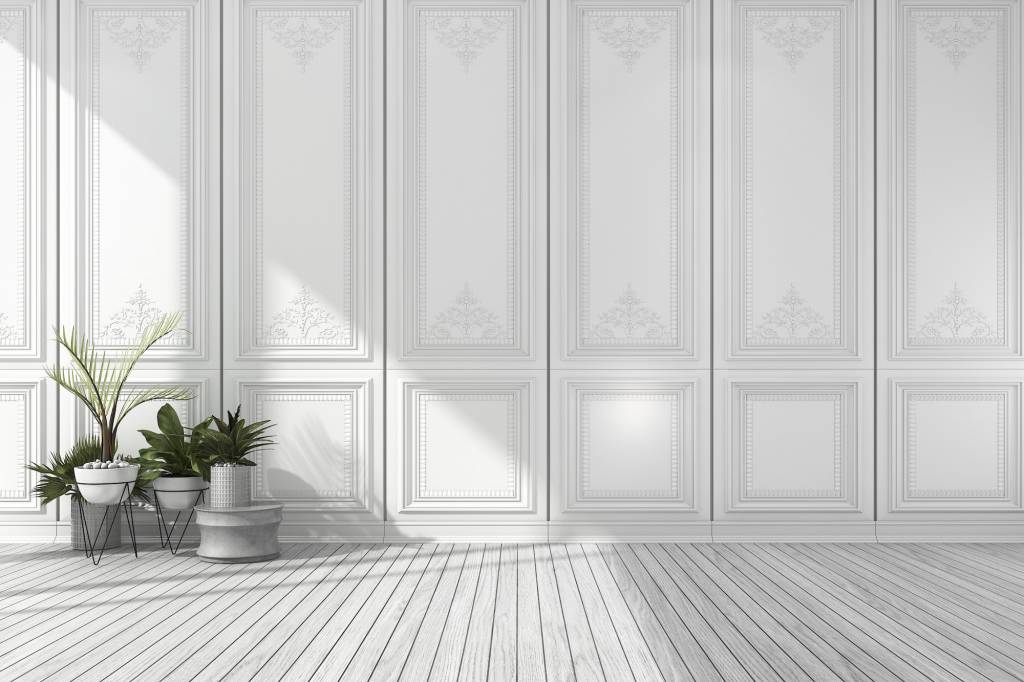
Solid hardwood: one solid piece of wood
Solid hardwood is exactly what it sounds like: each board is a single, solid piece of wood, usually about three-quarters of an inch thick, all the way through. It is the floor that has been in homes for generations — the one people refinish, sometimes more than once, over decades.
Its biggest strength is that top-to-bottom thickness. Because the whole board is wood, it can usually be sanded and refinished when the surface gets worn or scratched, giving the floor a new life without replacing it. Its look is hard to beat: the grain runs deep, and it ages the way real wood ages.
Its weakness is movement. Wood expands and shrinks as humidity changes, and solid boards move more than engineered ones. In Memphis, where the air stays humid much of the year, that matters. Solid hardwood does best on a wood subfloor, above ground level, in rooms where the indoor humidity stays fairly steady.
Engineered hardwood: real wood on top, stable layers below
Engineered hardwood has a top layer of real wood — the part you see and walk on — bonded to several layers of plywood or fiberboard underneath, with the grain of each layer running in a different direction. That crossed construction is what keeps it stable: the layers hold each other in place, so the board moves far less when humidity changes.
That stability is why engineered hardwood works in places solid wood struggles: over a concrete slab, in a room closer to ground level, or in a home where the humidity swings between seasons. Many engineered floors can also be sanded and refinished, but only if the real-wood top layer is thick enough — some have a thin veneer that cannot take a full sanding, so it is worth asking how thick that top layer is before you buy.
The Memphis question: humidity
Here is the honest version of the decision for most Memphis-area homes. If your home has a wood subfloor, the rooms are above ground, and you want a floor you can refinish again and again over a very long life, solid hardwood is a strong choice. If your home sits on a concrete slab — common in newer builds around Collierville — or the room is at or below ground level, or the humidity in the house swings a lot through the year, engineered hardwood is usually the safer, calmer choice.
Neither one is the “cheap version” of the other. They are two different answers to the same question, and the right answer depends on your house, not on a showroom sample.
What about the feel under your feet?
Solid hardwood feels solid and firm, and it sounds like the classic wood floors people grew up with. Engineered hardwood, installed well, feels very close to the same — most visitors cannot tell the difference by walking on it. What people do notice is a floor that was installed over an uneven base: hollow spots, clicks, and movement. That is an installation problem, not a material problem, and it happens with both kinds.
Cost: what actually moves the number
There is no single price for either one, because the species of wood, the width of the boards, the thickness of the top layer on engineered floors, the size of the area, and the condition of the base underneath all move the final number. What matters more than the material alone is getting a quote for your specific rooms, measured in your house, with the base checked before anyone starts.
Anyone who quotes a firm number over the phone without seeing your rooms is guessing with your money.
So which one for your house?
- Older home, wood subfloor, rooms above ground, and you want a floor to refinish for decades: solid hardwood is worth a serious look.
- Concrete slab, room at ground level, or humidity that swings a lot: engineered hardwood is usually the calmer, safer choice.
- You love the real-wood look but your rooms see real water: ask about vinyl plank instead — it gives you the wood look with a waterproof core, and it belongs in kitchens and bathrooms in a way wood does not.
- Not sure what is under your current floor: that is exactly what a home visit answers. The base underneath decides more than the showroom does.
The question to ask before you buy
Before you choose, ask the installer these three things: What is the subfloor in my rooms, and is it level? How thick is the real-wood top layer on this engineered floor, and can it be refinished? And what does the installation warranty cover, in writing?
In Nunez Flooring, every installation we do is backed by our 6-month warranty. Call us at (901) 552-2874, tell us which rooms you are thinking about, and we will measure them, check the base underneath, and walk you through solid and engineered options with real samples in your own light — no pressure either way.